How to Choose Website Visitor Identification Software (2026)
A founder's framework for choosing website visitor identification software: the questions that decide accuracy, coverage, and pipeline, answered with real benchmark data.
By Imran Patel, Co-founder and CEO, Syft DataUpdated 8 min read
I build website visitor identification software, and I have spent years watching this category sell itself on two numbers that fall apart the moment you lean on them. I got tired of buying tools based on their coverage claims and star ratings, only to watch them fill our pipeline with names that belonged to no one we could sell to.
What I learned is that almost every guide to choosing this software asks the wrong questions. They rank tools by G2 rating, which measures how much people enjoy the dashboard, and by coverage, which is the share of visitors a tool puts a name on, whether that name is right or wrong. Neither number predicts whether you close anything.
This is the framework I use, and the one I would hand any growth lead sizing up the category. Where I can show you hard numbers, they come from our 2024 visitor identification benchmark, in which we ran seven tools against the same visitors and published the results.
The rest comes from running this category for a living. Read it, then go run the two-week test at the end on your own traffic, because that is the only review that ever counts.
The short version:
- Decide company-level or person-level first. They do different jobs and carry very different accuracy.
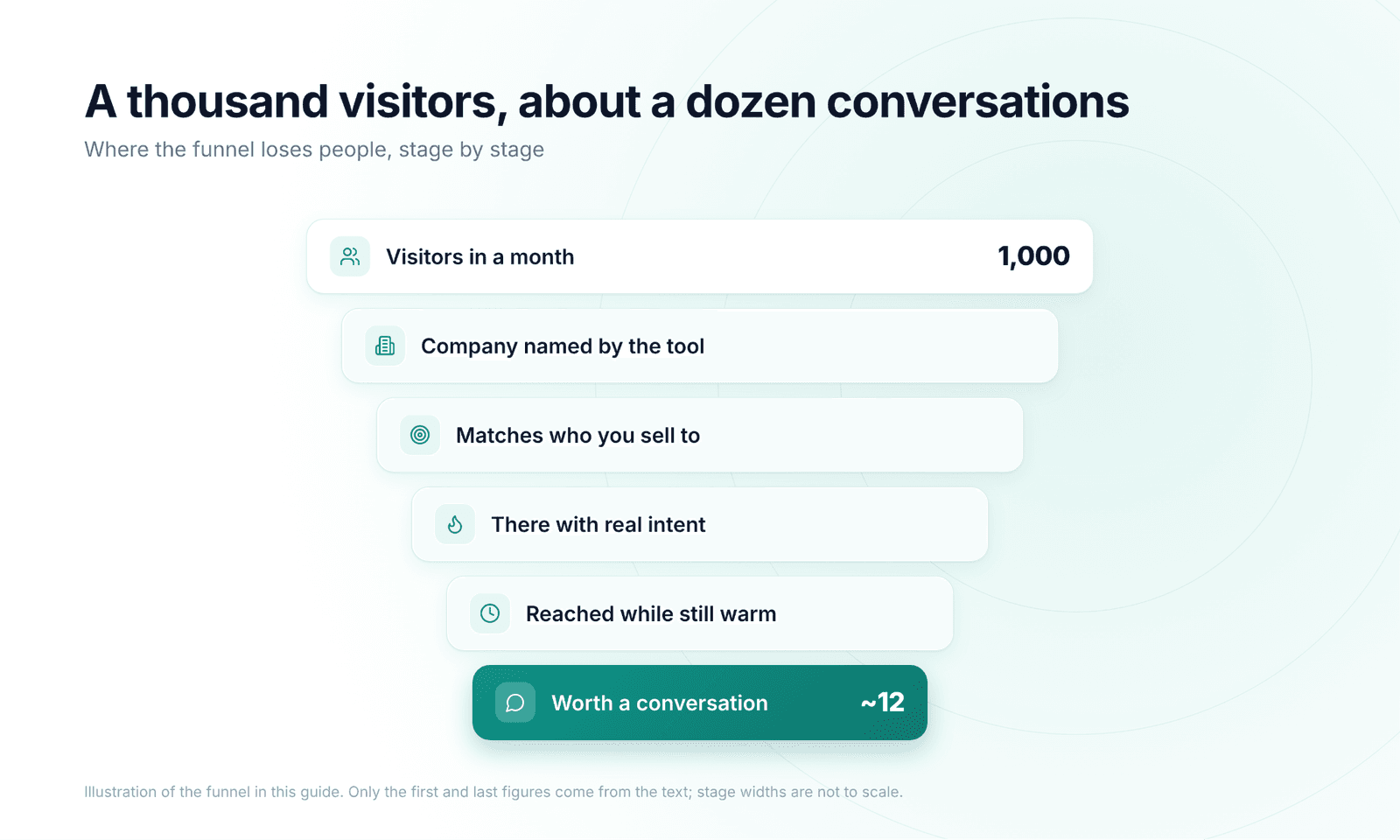
- No single data source sees your whole audience. The widest-reaching tool in our 2024 benchmark put a company name on about six in ten visitors, and one in five of those names was right, which is why stacking several sources is how you close the gap.
- Coverage is how many visitors get a name. Accuracy is how many of those names are right. The reviews sell you the first and hide the second.
- A name you cannot route to a person and a follow-up costs you more than it returns.
- Run two tools on the same pages for two weeks. That settles more than every star rating combined.
Can website visitors be identified by name?
Yes, sometimes, and far less often than the category implies. Naming the person behind a visit is the hardest thing this software does, and we call every one of those a suggested match, because it is always probabilistic and never a fact.
Two things decide how often it works. The first is geography, because person-level identification leans almost entirely on US data, and a confident name on European or APAC traffic is a triangulated guess you should treat with suspicion. The second is privacy: naming individuals in the EU generally needs consent while company-level identification usually runs on legitimate interest, which means the same tool can be clean in Austin and a liability in Amsterdam.
If you want a rep emailing a named human, you are buying person-level, and you accept that many of those names will be wrong before you filter. If you only need to know which accounts are warming up, company-level is enough, and it works in every region.
One source, or a reconciled stack?
One finding should reframe how you shop. When we tested seven visitor identification tools on the same visitors in 2024, the most precise of them named the right company for 42% of the visitors it identified, and the least precise managed 14%. No one database sees your whole audience, and whichever single feed a tool is built on, it misses or misnames much of your traffic.
A single signal is weak almost by definition, and everyone buying one vendor is buying the same weak signal. The fix is to stack several sources and reconcile them against each other, which lifts both coverage and quality because the sources check each other's work. When two independent sources name the same company for a visitor, that answer tends to be right.
This is why a tool can dazzle in a demo and then surface plumbers and teachers by week two, the way one agency described their old setup to me. One probabilistic guess from one database, dressed up as a confident name. When you evaluate a tool, the first real question is where its identification comes from and whether it reconciles more than one provider or bets everything on a single feed.
What the software reviews will not tell you
Search the software reviews, and you get the same ranked list every time, sorted by star rating. Those ratings are real, and they measure the wrong thing. A tool can earn a 4.8 because the onboarding is pleasant and support replies fast, while being wrong about who visited more often than it is right.
Coverage is the other number the reviews lean on, and it is the one that fools people, because a high coverage figure feels like accuracy while being nothing of the sort. In our 2024 benchmark, the widest-reaching tool put a company name on about six in ten visitors, which looks like respectable coverage until you learn that one in five of those names was right. One of the most precise tools answered for far fewer visitors, about one in seven, and was right 42% of the time.
Coverage counts how often a tool answers. Accuracy counts how often it is right, and only one of those is worth acting on.
No star rating on any review site will warn you about that gap, because no review site measures it. You have to run the tool on your own traffic to see it.
A dashboard, or something that acts?
Naming a visitor is the easy part. Pipeline shows up only when that name gets scored against your ideal customer profile, routed to a human, and followed up while it is still warm. A tool that stops at a dashboard of logos has handed you the hardest work and called it a feature.
Think of your website as a feedback channel on the accounts you already know. The people worth acting on are usually accounts you already touched somewhere else, who then came to read more, and knowing they visited matters less than doing something with the ones who fit.
Look hard at what happens after identification. Does it filter to your ICP, or dump everyone into a feed? Does it push the fit accounts into your CRM and your reps' workflow, or leave you exporting spreadsheets on a Friday night?
Do small marketing teams need visitor ID software?
It depends on two things, and team size is neither of them. You need a steady stream of real business visitors, because a tool that surfaces one company a week cannot earn its keep. And you need someone with the time to act the minute a fit account appears, because an unread alert is worse than no alert at all.
If your traffic is thin today, you do not have to walk away. Run the tool on your highest-traffic property first, or wait until your content and paid efforts are pulling business visitors, then come back to it. A two-person team with real traffic and a tight follow-up habit beats a ten-person team with neither.
The trap is buying on the thrill of knowing who visited. Buy instead on a plan to turn a handful of fit accounts a week into real conversations. If you cannot name the person who will work the alerts, wait until you can.
What a useful match costs
Price per month is the wrong unit. The number that matters is cost per useful record, the ICP-fit, correctly matched contact you would reach out to. Start from the sticker price, strip out the bots and the junk, strip out every name outside your ICP, strip out the wrong matches, and see what you paid for each contact worth a call.
Run that math and the cheap tool full of plumbers turns out expensive, while a pricier one that surfaces ten real accounts a week can be the bargain of your whole stack. Most pricing pages fight you on this, billing per identification so their coverage number reads like value. Count useful records instead.
The one test that settles it
Every question above collapses into a single exercise. Put two tools on the same pages for two weeks, feed them identical traffic, and count what matters: the ICP-fit, correctly matched names worth a real follow-up. The raw total rewards the noisiest tool, so throw it out.
That one test tells you more than every star rating and coverage claim combined, because it runs on the only traffic that will ever pay you, which is yours.
Where Syfty fits
Syfty (formerly Syft Data) exists because of question two. It runs several providers at once, reconciles their answers against each other, and scores whatever survives against the exact accounts and roles you sell to, the first-party intent you can act on.
Our 2024 benchmark shows why: when independent sources name the same company for a visitor, that answer tends to be right, and that agreement is what Syfty looks for when it identifies the companies and people on your site.
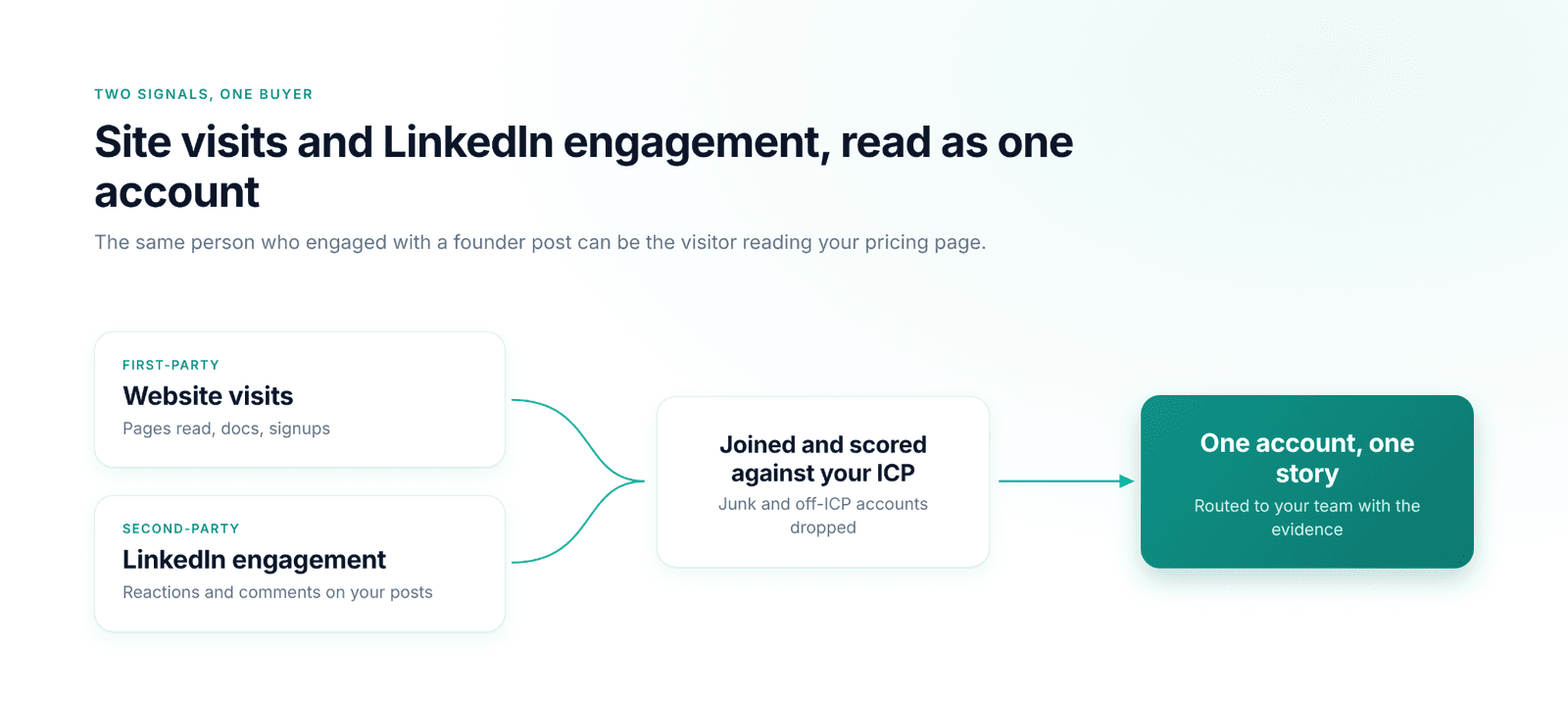
It also reads your LinkedIn engagement next to your site traffic, which means a person who engaged with your founder's post and then opened your pricing page arrives as one account with one story, already filtered to your ICP and routed to your team.
Socket, a customer of ours, uses Syft data in HubSpot to surface target accounts by their recent site activity, and its RevOps lead put the result plainly: "Outbound is now driven by real buyer behavior, not just a list and a hunch."
Website identification starts at $150 a month on Starter, and Pro at $500 a month adds LinkedIn intent. Neither needs a credit card to start, which means you can make Syfty one side of the two-week test and judge it on your own traffic.
FAQ
Is visitor identification software safe for customer data?
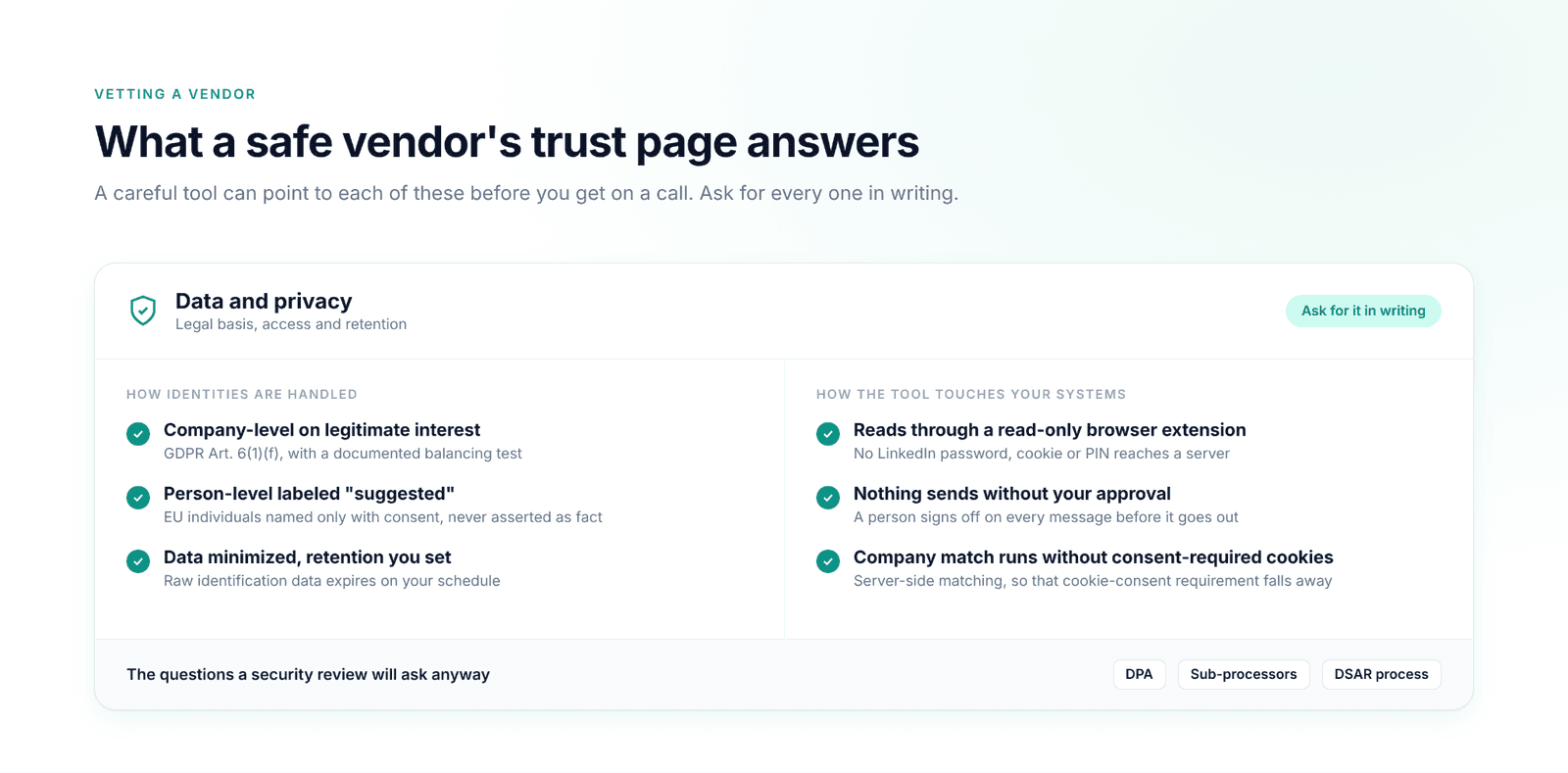
It can be, and the answer turns on how a tool sources its data and how you use it. Company-level identification usually runs on legitimate interest and carries less risk, while naming individuals in the EU generally needs consent. Get the vendor's data sourcing and consent model in writing, and have your own counsel read it before you roll it out across regions.
Should I choose company-level or person-level identification?
Start from what you will do with the answer. Company-level suits prioritizing an account list and works worldwide, while person-level is for direct outreach and holds up reliably only on US traffic. Many teams run company-level as the backbone and add person-level for their core US market.
How much does website visitor identification software cost?
Entry tools start around $50 to $100 a month, and annual-contract platforms start around $6,000 a year and climb past $30,000. The honest figure is cost per useful record. A tool is cheap only when the names it returns are correct and fit your ICP.